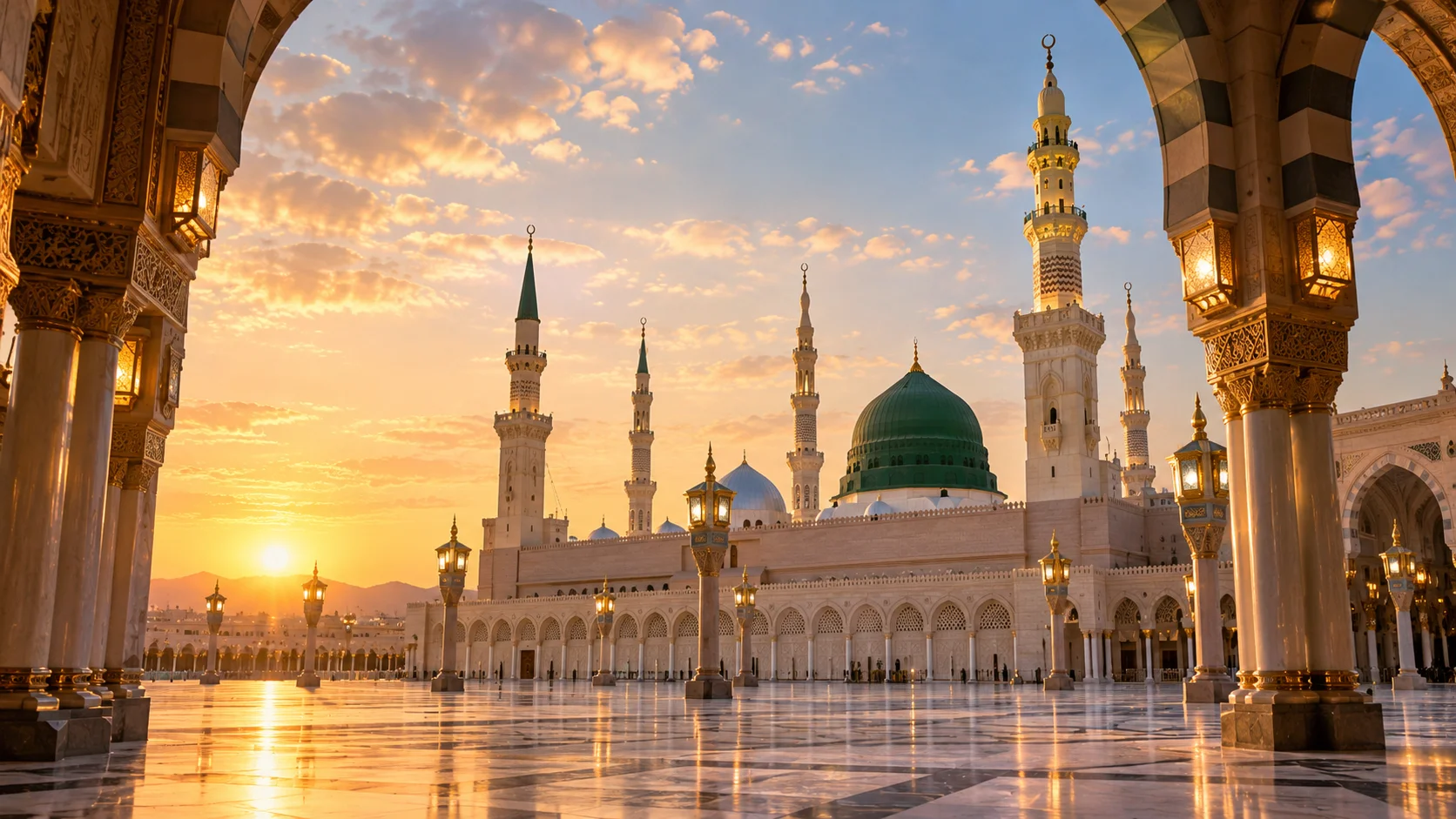

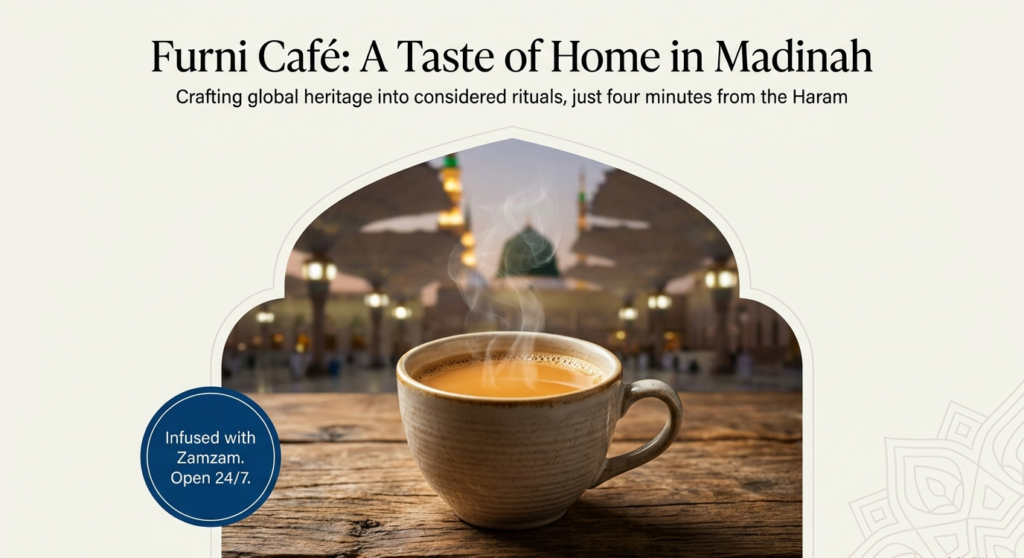
If you’ve spent any time near Al Masjid Al Nabawi, you’ve probably noticed something. Everyone seems to be holding a small cup of something dark, milky, and unreasonably fragrant. That’s karak chai. In Madinah, it’s more than just a drink. People enjoy it between prayers, share it with friends, or take a short break with a cup before walking again.
Karak Chai has been part of Gulf street culture for decades. But not all karak is equal, and the version coming out of Furni by Chai Karak, right in the Haram district, has people talking for reasons that go beyond the usual “it’s strong and sweet.” Here’s what actually makes it different, and what’s worth knowing before you order your first cup.
What Makes Karak Chai Different From Regular Tea
Regular tea is water, a teabag, maybe some milk if you’re in the mood. Karak Chai is a different process entirely.
Karak is made by simmering strong black tea, often Assam, rather than simply steeping a tea bag. This creates a richer flavour and a stronger cup. Whole spices go in during that simmer, most commonly cardamom, sometimes a thread of saffron or a stick of cinnamon, and they’re allowed to actually cook into the liquid rather than sit on top of it.
Then comes the milk. Karak chai almost never uses a splash of fresh milk the way you’d finish a British cup of tea. It’s built with something richer, often evaporated or condensed milk, which is what gives karak its thick, almost dessert-like texture. The tea isn’t diluted by the milk. It’s carried by it.
This is also where karak and masala chai get confused, even though they’re not the same drink. Masala chai usually contains a wider mix of spices, including ginger, cloves, black pepper, cinnamon and cardamom. Karak often uses fewer spices, allowing the tea and milk to stand out. It’s usually built around just one or two spices, cardamom especially, and lets the strength of the tea and the richness of the milk do most of the work. If masala chai is complex, karak is direct. That directness is exactly why it travels so well as a to-go cup near a mosque where people are moving quickly between prayers.
The Family Story Behind Furni’s Karak Chai
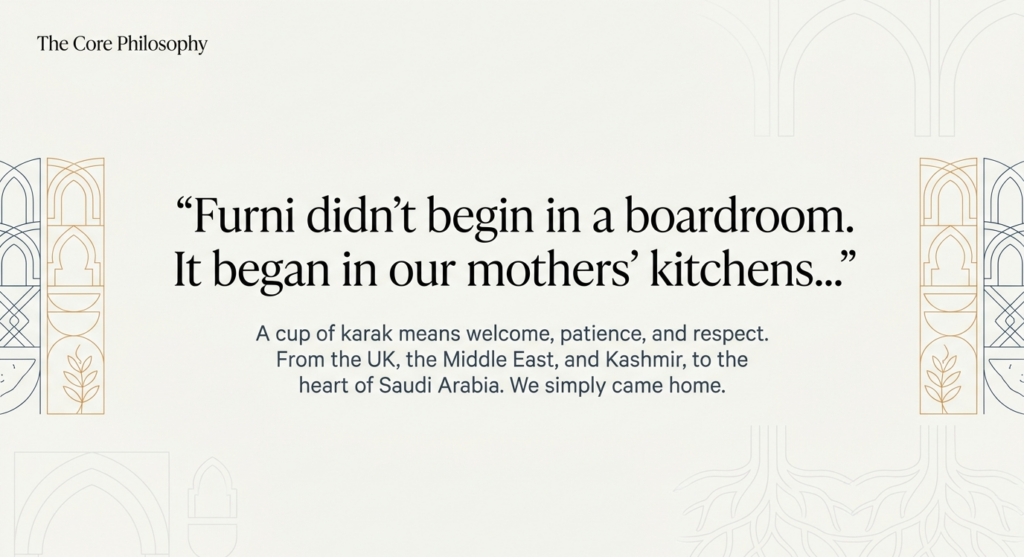
Most cafes near a major religious site lean on location alone. Furni’s story is a little more personal, and it shows up in the cup.
The people behind Furni didn’t grow up in one kitchen. Their families are spread across the UK, the Middle East, and Kashmir, three places that all take chai seriously, but not in the same way. Growing up between those worlds meant airports, three languages on a single phone call, and, according to the family, more than one grandmother who was quietly convinced her chai was the only correct one.
What stuck wasn’t the disagreement over recipes. It was the thing every branch of the family agreed on without ever discussing it: don’t cut corners on ingredients, and don’t rush the person you’re serving. That’s a very Kashmiri and South Asian idea of hospitality, actually, where the offer of tea is rarely just about the tea.
Years later, after careers and businesses built in different countries, that same family ended up choosing Madinah, not as a market to enter, but as somewhere that had always come up in family conversation regardless of which branch was talking. Furni is what came out of that: a proper karak made without a powdered shortcut, a smash burger served on paratha instead of a bun, a karak coffee, and an Ajwa date caramel latte built around one of Madinah’s most recognizable local ingredients. The menu reads like a family that spent years abroad finally cooking the way they actually eat at home.
That’s the useful thing to know if you’re deciding where to get karak chai near Masjid Nabawi: you’re not just picking a cafe on a map, you’re picking a specific version of a recipe that’s been argued over across three continents.
Hot vs. Iced Karak: When Locals and Pilgrims Choose Each
The choice between hot and iced karak often depends on the weather and time of day. In Madinah, each version suits a different situation.
Hot karak is the early-morning and late-evening choice. After Fajr, when the air still has a bit of a chill, and the walk back from the Haram feels good rather than draining, a hot cup does exactly what it’s supposed to: warms you up, wakes you up, and gives you a reason to slow down for a minute before the day picks up pace. Hot karak tends to make more sense in the cooler hours, while iced karak is an easier choice once Madinah’s afternoon heat kicks in, and it’s the version most people associate with the “proper” chai experience, thick, steaming, served small.
Iced karak earns its place from around late morning through the afternoon, when Madinah’s heat makes anything hot a hard sell. This is where pilgrims in particular lean, especially those visiting from cooler climates who aren’t used to the midday sun. Iced karak keeps the same spice and body as the hot version, it’s just served cold, and it works far better as something you can carry while walking rather than sipping slowly while seated.
Neither version is the “more authentic” one. Which you choose is really a question of the time of day and how your body is handling the heat, not tradition.
Where to Get Karak Chai Near the Haram
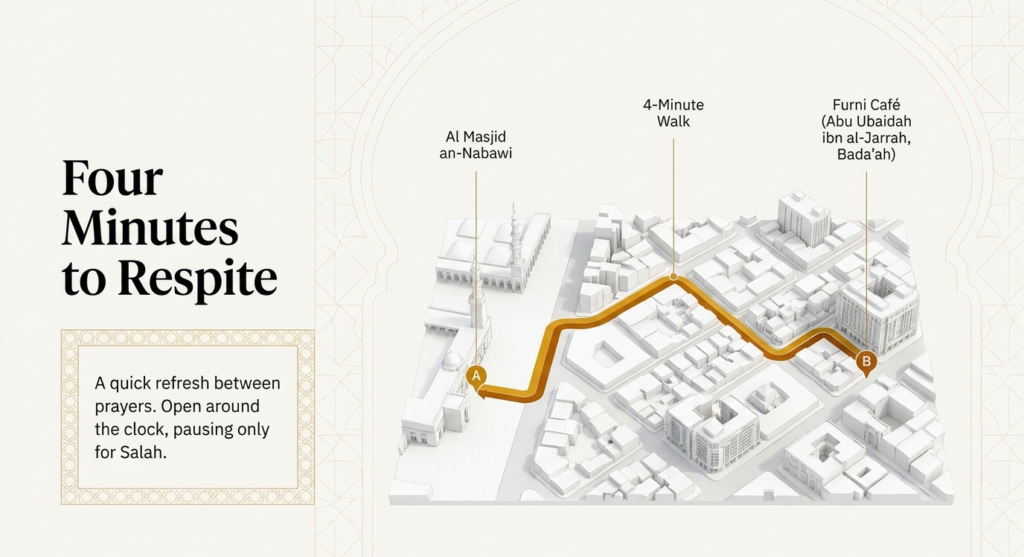
Furni sits in the Haram district of Madinah, a few steps from Al Masjid Al Nabawi, close enough that it works naturally as a stop on the walk to or from prayer rather than a destination you plan a separate trip for.
That location matters more than it might seem. Karak is a drink built for movement, grab a cup, keep walking, finish it before you’re back at your hotel. A cafe that’s genuinely close to the mosque fits that habit. One that’s a taxi ride away doesn’t, no matter how good the tea is.
If you’re planning a visit, the most reliable way to find the exact spot is through Furni’s own directions page rather than guessing from a general “cafes near Haram” search, since the walking routes around the mosque shift depending on which gate you’re using.
Why Furni’s Karak Chai Stands Out: The Zamzam Water Detail
Here’s the part that genuinely sets Furni apart, and it’s not a marketing flourish. Every drink and dish served at Furni, including the karak chai itself, is prepared using Zamzam water rather than standard tap or filtered water.
Water plays an important role in the taste of tea. That is why FURNI’s use of Zamzam water is a distinctive part of its preparation. The water you brew with shapes the final cup more than most people realize; it’s why tea enthusiasts obsess over mineral content and filtration long before they think about the tea leaves themselves. Using Zamzam water as the base for karak isn’t something most cafes, in Madinah or anywhere else, can genuinely claim, simply because it’s not the default choice for commercial beverage prep.
Combine that with a recipe shaped by three different family traditions, a location that sits within walking distance of the mosque, and a menu built around things people actually crave after a long walk (a proper karak, a paratha-wrapped burger, an Ajwa latte), and it’s easier to understand why Furni’s version of karak chai has become something people specifically seek out near Masjid Nabawi rather than just grabbing whatever’s closest.
If you’re already heading toward Masjid Nabawi and want a recharge with a hot cup of karak chai, Furni is an easy stop on the way. Check the current location and opening hours before you go, then decide whether you’re in the mood for a hot karak, iced karak, or one of the other drinks on the menu
Final Thoughts (and One Bonus Reason)
So that’s three reasons: the slow-simmered richness of the tea, the cardamom-and-ginger warmth in every cup, and the kind of calm you only find in Madinah after Isha, when the streets soften, and nobody is in a hurry. Any one of them is worth the walk. Together, they’re the reason people come back to Furni year after year.
But there’s one more, and honestly, it’s the one our regulars talk about most.
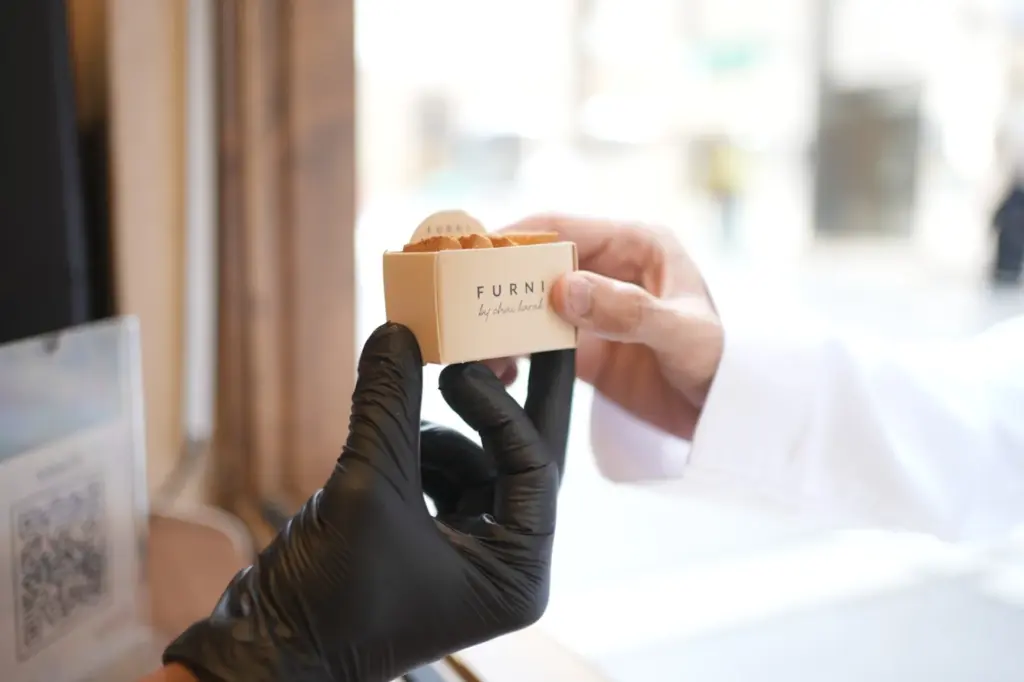
Bonus Reason: Send Salawaat, Get a Free FURNI Special Biscuit
In the city of the Prophet ﷺ, it feels right to sweeten the moment properly. So here’s our little tradition: recite Salawaat upon the Prophet ﷺ at our counter, and your cup of karak chai comes with a free FURNI Special biscuit. No catch, no coupon, no fine print. Just a few beautiful words, a warm cup, and something crisp and buttery to dip into it.
We didn’t plan it as a promotion. It started because we thought a place that serves tea in Madinah should have a little barakah built into the experience. Now it’s the part customers remember long after they’ve flown home. Some say it out loud, some whisper it, and some bring the whole family in to say it together. Every version makes us smile.
So when you’re in Madinah and the evening air turns cool, come find us. Order your karak, say your Salawaat, and let the biscuit be our small gift to you.
Furni Karak Chai. One cup, and you’ll understand why.
إذا سبق لك قضاء بعض الوقت بالقرب من المسجد النبوي، فربما لاحظت مشهدًا مألوفًا: يبدو أن الجميع يحمل كوبًا صغيرًا من مشروب داكن، كريمي، وفوّاح برائحة التوابل.
إنه شاي الكرك.
في المدينة المنورة، الكرك ليس مجرد مشروب. يستمتع به الناس بين الصلوات، ويتشاركونه مع الأصدقاء، أو يأخذون استراحة قصيرة مع كوب منه قبل مواصلة المشي.
ارتبط الكرك بثقافة الشارع في منطقة الخليج لعقود، لكن ليست كل أنواع الكرك متشابهة. أما الكرك الذي تقدمه «فورني باي تشاي كرك» في منطقة الحرم، فقد أصبح محط اهتمام لأسباب تتجاوز مجرد كونه «قويًا وحلوًا».
إليك ما يميّزه فعلًا، وما يستحق معرفته قبل أن تطلب كوبك الأول.
ما الذي يميز شاي الكرك عن الشاي العادي؟
الشاي العادي قد يكون ماءً مع كيس شاي، وربما قليلًا من الحليب حسب الرغبة. أما الكرك، فطريقة تحضيره مختلفة تمامًا.
يُحضّر الكرك من خلال غلي الشاي الأسود القوي، وغالبًا ما يكون من شاي آسام، بدلًا من مجرد نقع كيس الشاي. وهذا يمنحه نكهة أغنى ومذاقًا أقوى.
تُضاف التوابل الكاملة أثناء الغلي، وأكثرها شيوعًا الهيل، وأحيانًا خيط من الزعفران أو عود من القرفة. وتُترك هذه المكونات لتغلي مع الشاي وتندمج نكهاتها فيه، بدلًا من إضافتها فقط على سطح المشروب.
ثم يأتي الحليب.
وعلى عكس كوب الشاي البريطاني التقليدي الذي قد يُضاف إليه قليل من الحليب في النهاية، يعتمد شاي الكرك عادةً على حليب أكثر كثافة، مثل الحليب المبخر أو المكثف، وهو ما يمنحه قوامًا غنيًا يشبه الحلويات إلى حد ما.
الحليب هنا لا يخفف الشاي؛ بل يمنحه قوامه ويكمل نكهته.
وهنا أيضًا يحدث الخلط بين الكرك وشاي الماسالا، رغم أن المشروبين ليسا متطابقين.
عادةً ما يحتوي شاي الماسالا على تشكيلة أوسع من التوابل، مثل الزنجبيل والقرنفل والفلفل الأسود والقرفة والهيل. أما الكرك، فعادةً ما يعتمد على عدد أقل من التوابل، ما يسمح لنكهة الشاي والحليب بأن تكون في الواجهة.
وغالبًا ما يعتمد على نوع أو نوعين من التوابل، ويأتي الهيل في مقدمتها، بينما تقوم قوة الشاي وغنى الحليب بمعظم العمل.
إذا كان شاي الماسالا معقد النكهات، فالكرك مباشر وواضح.
وهذه البساطة تحديدًا هي أحد أسباب ملاءمته كمشروب سريع يمكن أخذه معك بالقرب من المسجد، خصوصًا عندما يكون الناس في حركة مستمرة بين الصلوات.
القصة العائلية وراء شاي الكرك في فورني
تعتمد معظم المقاهي القريبة من المواقع الدينية الكبرى على موقعها كعامل أساسي لجذب الزوار. لكن قصة فورني أكثر ارتباطًا بالعائلة، وهذا يظهر أيضًا في الكوب الذي تقدمه.
لم ينشأ أفراد العائلة التي تقف وراء فورني في مطبخ واحد. فقد توزعت عائلاتهم بين المملكة المتحدة والشرق الأوسط وكشمير؛ وهي ثلاث مناطق تنظر إلى الشاي باعتباره جزءًا مهمًا من الحياة اليومية، ولكن لكل منها طريقتها الخاصة.
النشأة بين هذه الثقافات المختلفة تعني سنوات من السفر، وثلاث لغات في مكالمة هاتفية واحدة، وأكثر من جدة كانت مقتنعة بهدوء بأن طريقتها هي الطريقة الصحيحة الوحيدة لتحضير الشاي.
لكن الشيء الذي بقي من كل تلك الاختلافات لم يكن الجدل حول الوصفات.
بل كان هناك أمر اتفقت عليه فروع العائلة كلها دون الحاجة إلى مناقشته:
لا تختصر في جودة المكونات، ولا تتعامل مع الشخص الذي تخدمه وكأنك مستعجل.
وهذه فكرة متجذرة في ثقافة الضيافة الكشميرية وجنوب آسيا، حيث إن تقديم الشاي غالبًا لا يتعلق بالشاي وحده.
بعد سنوات من بناء المسارات المهنية والأعمال في دول مختلفة، اختارت العائلة المدينة المنورة؛ ليس باعتبارها سوقًا جديدًا تدخل إليه، وإنما باعتبارها مكانًا ظل حاضرًا في أحاديث العائلة مهما اختلفت فروعها ومواقعها.
ومن هنا جاءت فورني.
كرك حقيقي يُحضّر من دون استخدام مسحوق بديل، وبرغر سماش يُقدّم داخل خبز البراتا بدلًا من الخبز التقليدي، وقهوة بالكرك، ولاتيه كراميل بالعجوة يعتمد على أحد أكثر المكونات المحلية ارتباطًا بالمدينة المنورة.
القائمة تبدو وكأنها انعكاس لعائلة قضت سنوات في الخارج ثم عادت أخيرًا لتحضّر الطعام بالطريقة التي اعتادت عليها في المنزل.
وهذا أمر مهم إذا كنت تبحث عن مكان لتناول شاي الكرك بالقرب من المسجد النبوي.
فأنت لا تختار مجرد مقهى على الخريطة، بل تختار نسخة محددة من وصفة تناقلت تفاصيلها عائلة امتدت جذورها عبر ثلاث قارات.
الكرك الساخن أم المثلج؟ متى يختار كل منهما؟
غالبًا ما يعتمد الاختيار بين الكرك الساخن والمثلج على الطقس ووقت اليوم. وفي المدينة المنورة، يناسب كل نوع موقفًا مختلفًا.
الكرك الساخن
الكرك الساخن خيار مناسب في الصباح الباكر وفي ساعات المساء المتأخرة.
بعد صلاة الفجر، عندما يكون الجو أكثر اعتدالًا، ويصبح المشي عائدًا من الحرم تجربة مريحة بدلًا من أن يكون مرهقًا، يمكن لكوب ساخن أن يؤدي دوره تمامًا: يمنحك الدفء، ويساعدك على بدء يومك، ويمنحك سببًا للتوقف قليلًا قبل أن تبدأ وتيرة اليوم بالارتفاع.
لذلك يميل الكرك الساخن إلى أن يكون أكثر ملاءمة خلال الساعات الأكثر برودة.
الكرك المثلج
أما عندما تبدأ حرارة المدينة المنورة بالارتفاع خلال ساعات النهار، فيصبح الكرك المثلج خيارًا أسهل.
ويكون مناسبًا بشكل خاص من أواخر الصباح وحتى فترة الظهيرة، عندما تجعل حرارة المدينة تناول مشروب ساخن أقل جاذبية.
وقد يميل إليه المعتمرون والزوار القادمين من المناطق ذات الطقس المعتدل أو البارد، والذين قد لا يكونون معتادين على حرارة منتصف النهار في المدينة.
يحافظ الكرك المثلج على النكهات والتوابل والقوام المميز للكرك الساخن، لكنه يُقدّم باردًا، كما أنه أكثر ملاءمة للحمل أثناء المشي بدلًا من الجلوس وتناوله ببطء.
لا يعني ذلك أن أحد النوعين «أكثر أصالة» من الآخر.
الاختيار في النهاية يعتمد على وقت اليوم وعلى مدى تقبّل جسمك للحرارة، وليس على مسألة التقاليد.
أين تجد شاي الكرك بالقرب من الحرم؟
تقع فورني في منطقة الحرم بالمدينة المنورة، وعلى مسافة قريبة من المسجد النبوي، ما يجعلها محطة مناسبة ضمن طريقك إلى الصلاة أو عند العودة منها، بدلًا من أن تحتاج إلى تخصيص رحلة منفصلة لزيارتها.
وهذا الموقع أهم مما قد يبدو.
فالكرك مشروب يناسب الحركة: تأخذ كوبك، وتواصل المشي، وتنهيه قبل أن تصل إلى الفندق.
لذلك فإن وجود مقهى قريب فعلًا من المسجد يتناسب مع هذه العادة. أما المقهى الذي يتطلب ركوب سيارة أجرة للوصول إليه، فلن يوفر التجربة نفسها مهما كانت جودة الشاي.
إذا كنت تخطط لزيارة فورني، فمن الأفضل الاعتماد على صفحة الاتجاهات الخاصة بالمقهى لمعرفة موقعه بدقة، بدلًا من الاعتماد فقط على نتائج البحث العامة عن «المقاهي القريبة من الحرم»، خصوصًا أن مسارات المشي حول المسجد قد تختلف بحسب البوابة التي تستخدمها.
لماذا يتميز شاي الكرك في فورني؟ تفصيل ماء زمزم
وهنا يأتي الجانب الذي يميز فورني بشكل واضح، وهو ليس مجرد عبارة تسويقية.
جميع المشروبات والأطعمة التي تُقدّم في فورني، بما في ذلك شاي الكرك نفسه، يتم تحضيرها باستخدام ماء زمزم بدلًا من مياه الصنبور أو المياه المفلترة.
للماء دور مهم في مذاق الشاي. ولهذا فإن استخدام فورني لماء زمزم يمثل جزءًا مميزًا من طريقة التحضير.
نوعية المياه التي تستخدمها في تحضير الشاي يمكن أن تؤثر في النتيجة النهائية أكثر مما قد يتوقعه كثيرون. ولهذا يهتم عشاق الشاي بجودة المياه ومحتواها المعدني وطريقة تنقيتها قبل أن يفكروا حتى في أوراق الشاي نفسها.
واستخدام ماء زمزم كأساس لتحضير الكرك ليس أمرًا معتادًا في معظم المقاهي، سواء في المدينة المنورة أو في أماكن أخرى، لأنه ليس الخيار الافتراضي لتحضير المشروبات التجارية.
وعندما تجمع ذلك مع وصفة تشكلت من خلال ثلاث ثقافات عائلية مختلفة، وموقع يقع على مسافة قريبة سيرًا من المسجد، وقائمة صُممت حول أشياء يرغب فيها الناس فعلًا بعد المشي لمسافات طويلة، مثل الكرك، وبرغر البراتا، ولاتيه العجوة، يصبح من الأسهل فهم سبب بحث بعض الزوار تحديدًا عن كرك فورني بالقرب من المسجد النبوي بدلًا من اختيار أقرب مقهى عشوائيًا.
إذا كنت متجهًا بالفعل نحو المسجد النبوي وترغب في أخذ استراحة وتجديد نشاطك مع كوب من شاي الكرك الساخن، فإن فورني خيار سهل لإضافته إلى طريقك.
تحقق من الموقع وساعات العمل الحالية قبل الذهاب، ثم اختر ما يناسبك: كرك ساخن، أو كرك مثلج، أو أحد المشروبات الأخرى الموجودة في القائمة.